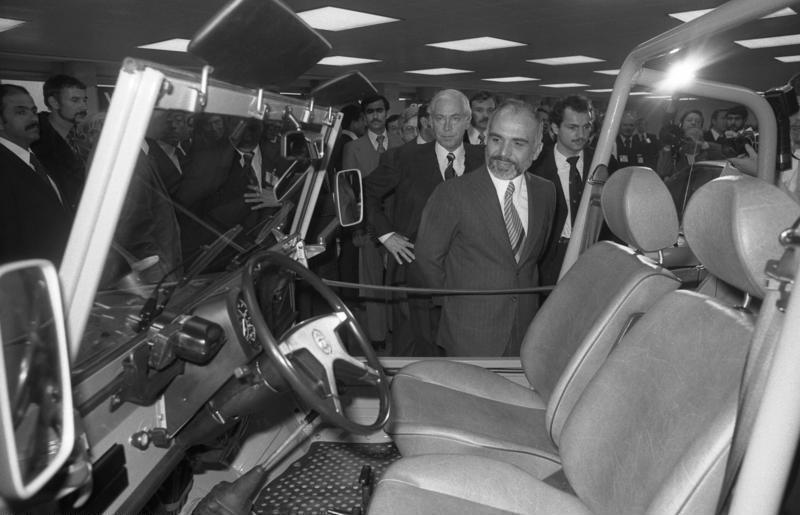
Volkswagen Iltis Type 183
The Volkswagen Iltis (German for 'polecat') is one of the most historically significant yet least known vehicles in the Volkswagen Group's history. Developed primarily as a military vehicle for the German Bundeswehr, the Iltis would achieve two remarkable things: it won the grueling 1980 Paris-Dakar Rally outright, and its four-wheel-drive system directly inspired the creation of the Audi quattro.
The Iltis was designed by Audi's engineering team at Ingolstadt, using the Audi 50/VW Polo engine and drivetrain components in a purpose-built military chassis. The 1.7-liter inline-four produced a modest 75 hp, but the sophisticated four-wheel-drive system — with a lockable center differential and independent front suspension — gave the Iltis remarkable off-road capability despite its modest dimensions.
The Iltis's finest hour came at the 1980 Paris-Dakar Rally, one of the world's toughest motorsport events. Two factory-supported Iltis vehicles entered the rally, and Freddy Kottulinsky drove one to an outright victory — beating purpose-built rally trucks, Range Rovers, and other dedicated off-road vehicles. This victory was a sensation and caught the attention of Audi's engineers, who were developing a permanent four-wheel-drive system for road cars. The experience gained with the Iltis's 4WD system directly contributed to the development of the legendary Audi quattro.
Approximately 9,547 Iltis vehicles were built — the majority for the German Bundeswehr, with additional units for the Canadian Armed Forces (built under license by Bombardier in Quebec). The military versions were spartan, utilitarian machines designed for rough use. A small number of civilian versions were sold, primarily in Germany.
The Iltis served with distinction in NATO forces, proving itself in conditions ranging from the forests of northern Germany to Canadian arctic training exercises. Its combination of light weight, capable 4WD, and simple mechanicals made it effective in conditions where larger, heavier vehicles struggled.
Today, the Iltis is a rare and intriguing collector vehicle. Its connection to both the Dakar Rally victory and the birth of Audi quattro makes it historically significant. Decommissioned military examples appear occasionally on the market, typically in rough condition from years of hard military service.
Iltis vehicles are rare on the civilian market. Most available examples are decommissioned military vehicles in varying condition. Rust is a significant concern — military use was hard on these vehicles. The Audi-derived engine is relatively simple and parts are available through VW/Audi channels. The 4WD system is robust but check for differential and transfer case wear. Canvas top and body panels deteriorate from military use. Electrical systems are basic military-spec. Canadian-built Bombardier examples may have different specifications. A thorough mechanical inspection is essential before purchase.
Approximately 9,547 units produced. German production at the Audi factory in Ingolstadt (about 2,500 units for the Bundeswehr). Canadian production by Bombardier in Saint-Joseph-de-Sorel, Quebec (about 1,900 units for the Canadian Forces, plus exports). The Belgian Armed Forces also operated the Iltis. The Paris-Dakar winning car is preserved in the Audi museum.