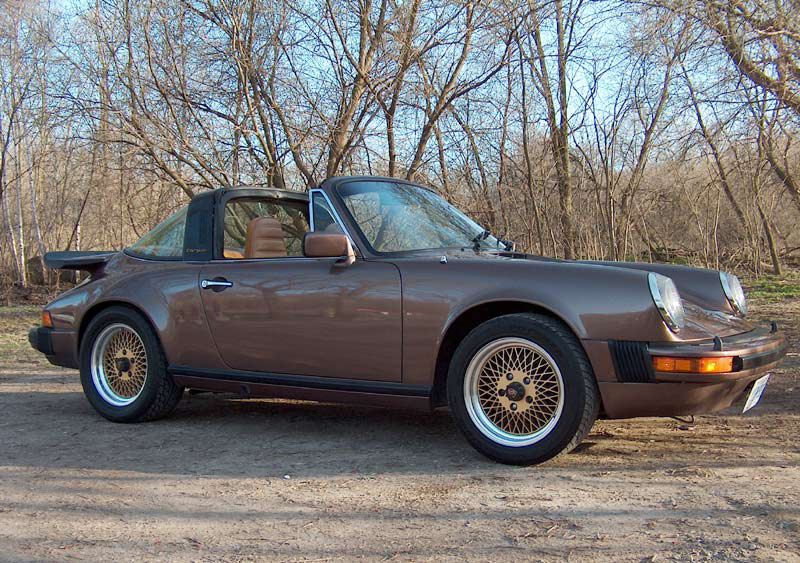
Porsche 911 SC Targa
The Porsche 911 SC, produced from 1978 to 1983, occupies a special place in the 911 lineage as the car that saved the model from extinction. In the mid-1970s, Porsche seriously considered replacing the 911 with the front-engine 928, but overwhelming customer demand and the engineering excellence of the SC convinced management to keep the rear-engine icon alive. The 'SC' designation stood for 'Super Carrera,' harking back to the legendary Carrera name.
At the heart of the SC was a 3.0-liter naturally aspirated flat-six engine that produced 180 horsepower in its initial form, later increased to 204 horsepower for 1981-1983 models. This engine, derived from the proven 930 Turbo's bottom end, gained a well-deserved reputation for extraordinary durability. Many SC engines have exceeded 200,000 miles without major overhaul, a testament to the conservative tuning and robust construction that defined this generation.
The Targa variant, with its distinctive brushed stainless steel rollover bar and removable roof panel, offered open-air motoring with added structural rigidity compared to a full convertible. The wide B-pillar incorporated the roll bar structure, providing meaningful protection in the event of a rollover while creating the 911's most recognizable silhouette. The removable roof panel stowed neatly behind the rear seats, and a zippered plastic rear window could be folded down for additional ventilation.
Driving the SC Targa was a sensory feast. The naturally aspirated flat-six sang with a distinctive air-cooled wail that reached a crescendo near the 6,500 rpm redline. The chassis, refined through more than a decade of continuous development, offered exceptional feedback through the steering, pedals, and seat. The car communicated every road surface change, every tire slip angle adjustment, making it an extension of the driver's senses.
Practical considerations were not overlooked. The 911 SC could serve as a daily driver, with adequate luggage space in the front trunk, reasonable fuel economy, and a heating system that actually worked — something earlier 911s struggled with. The Bosch K-Jetronic fuel injection eliminated the carburetor tuning issues of previous models, while the galvanized body shell dramatically improved corrosion resistance.
The SC-era represents what many enthusiasts consider the sweet spot of 911 ownership: the mechanical simplicity and sensory engagement of air-cooled engineering, combined with enough modern refinement for regular use. Production figures reflect its popularity, with nearly 59,000 units produced across all body styles during its five-year run.
SC engines are incredibly robust but check for oil leaks from chain cover, cam covers, and case halves. The biggest concern is rust — inspect jacking points, kidney areas behind rear wheels, front trunk floor, and windshield frame. The Type 915 gearbox is strong but synchro wear on 2nd gear is common. Verify CIS fuel injection is working properly — cold start issues suggest a failing warm-up regulator. Check for cracked Targa top weatherstripping. Electrical issues (window regulators, gauge senders) are common but manageable.
The SC replaced the 911 Carrera 3.0 and initially produced 180 hp (1978-79). Power increased to 188 hp for 1980 models and 204 hp for 1981-83. A Cabriolet was added for 1983 only, the first factory open 911 since the 1965 model. Total SC production across Coupe, Targa, and Cabriolet was approximately 58,914 units.