
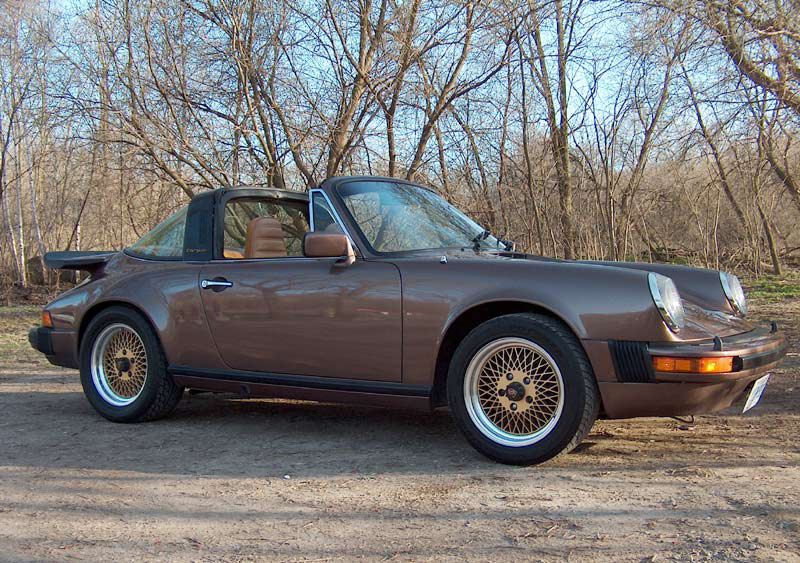
Germany vs West Germany — 1974 vs 1978
| 911 Turbo 930 3.3 | 911 SC Targa | |
|---|---|---|
| Horsepower | 300 hp | 180 hp |
| Torque | 318 lb-ft | 196 lb-ft |
| Engine Size | 3,299 cc | 2,994 cc |
| 0-60 mph | 5.2 sec | 6.3 sec |
| Top Speed | 162 mph | 146 mph |
| ¼ Mile | 13.5 sec | 14.8 sec |
| Weight | — | 2,557 lbs |
| Wheelbase | 2,272 mm | 2,272 mm |
| Length | 4,291 mm | 4,291 mm |
| Units Produced | 18,770 | 58,914 |
| Original MSRP | — | $27,450 |
| Value (Excellent) | $250,000 | $150,000 |
| Collectibility | 5/10 | 7/10 |
| Rarity | 6/10 | 4/10 |
The 1974 Porsche 911 Turbo 930 3.3 holds an edge across most measurable criteria, offering more power, quicker acceleration, higher top speed. That said, the 1978 Porsche 911 SC Targa brings stronger collectibility, better value and remains a compelling choice for enthusiasts who value Porsche heritage. The right pick depends on whether you prioritize specifications or the intangible qualities that make a car truly special.
Tracing the evolution of the Porsche 911 Turbo from 1974 to 1978 offers a compelling look at how automotive design and engineering progressed. These two variants showcase the changing face of Porsche. The 1974 Porsche 911 Turbo 930 3.3 holds a clear advantage in raw power with 300 hp compared to 180 hp, a 120-horsepower difference that shapes the driving experience. Under the hood, the contrast is notable: the Porsche 911 Turbo uses a Flat-6 Turbocharged Air-Cooled displacing 3,299 cc, while the Porsche 911 SC relies on a Flat-6 SOHC with 2,994 cc. In the sprint to 60 mph, the 1974 Porsche 911 Turbo 930 3.3 edges ahead at 5.2 seconds versus 6.3 seconds. From a collectibility standpoint, the 1978 Porsche 911 SC Targa rates higher among enthusiasts and auction houses.