
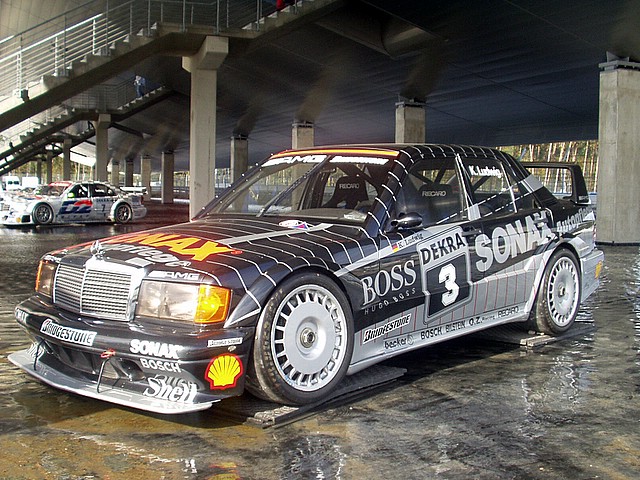
Germany vs Germany — 1986 vs 1992
| 190E 2.5-16 Evolution II | 190E 2.5-16 Evolution II | |
|---|---|---|
| Horsepower | 235 hp | 235 hp |
| Torque | 181 lb-ft | 181 lb-ft |
| Engine Size | 2,463 cc | 2,463 cc |
| 0-60 mph | 7.1 sec | 7.1 sec |
| Top Speed | 155 mph | 155 mph |
| ¼ Mile | 15.0 sec | 15.4 sec |
| Weight | 2,954 lbs | 2,998 lbs |
| Wheelbase | 2,665 mm | 2,665 mm |
| Length | 4,480 mm | 4,475 mm |
| Units Produced | 502 | 502 |
| Original MSRP | $79,000 | $75,000 |
| Value (Excellent) | $400,000 | $350,000 |
| Collectibility | 9/10 | 9/10 |
| Rarity | 9/10 | 9/10 |
This matchup is remarkably close. The 1986 Mercedes-Benz 190E 2.5-16 Evolution II offers its unique character, while the 1992 Mercedes-Benz 190E 2.5-16 Evolution II counters with quicker acceleration. Neither holds a decisive advantage, making this a true enthusiast's dilemma. Your choice ultimately depends on which driving philosophy resonates more with you.
The Mercedes-Benz 190E lineage tells a fascinating story of automotive evolution. Comparing the 1986 Mercedes-Benz 190E 2.5-16 Evolution II with the 1992 Mercedes-Benz 190E 2.5-16 Evolution II reveals how Mercedes-Benz refined and reimagined one of its most important nameplates over the years. On paper, the two are remarkably close in power output, with the 1986 Mercedes-Benz 190E 2.5-16 Evolution II producing 235 hp and the 1992 Mercedes-Benz 190E 2.5-16 Evolution II delivering 235 hp. Under the hood, the contrast is notable: the Mercedes-Benz 190E uses a Inline-4 DOHC 16V displacing 2,463 cc, while the Mercedes-Benz 190E relies on a Inline-4 with 2,463 cc. In the sprint to 60 mph, the 1992 Mercedes-Benz 190E 2.5-16 Evolution II edges ahead at 7.1 seconds versus 7.1 seconds. Both trade at comparable values on the collector market, making the choice between them largely one of personal preference.