
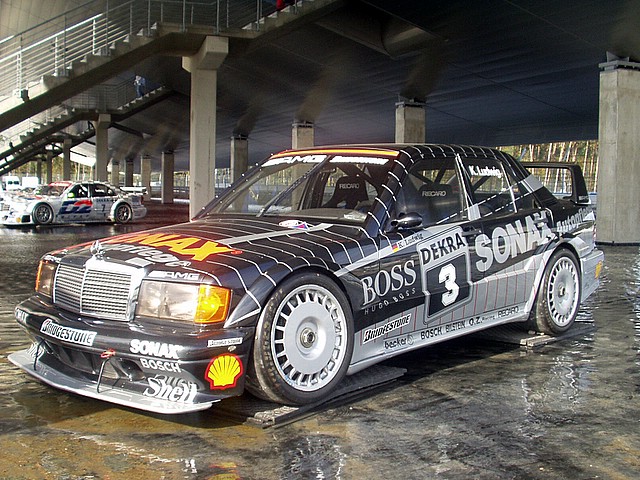
Germany vs Germany — 1989 vs 1992
| B10 Bi-Turbo | 190E 2.5-16 Evolution II | |
|---|---|---|
| Horsepower | 360 hp | 235 hp |
| Torque | 383 lb-ft | 181 lb-ft |
| Engine Size | 3,430 cc | 2,463 cc |
| 0-60 mph | 5.0 sec | 7.1 sec |
| Top Speed | 181 mph | 155 mph |
| ¼ Mile | 13.4 sec | 15.4 sec |
| Weight | 3,638 lbs | 2,998 lbs |
| Wheelbase | 2,761 mm | 2,665 mm |
| Length | 4,720 mm | 4,475 mm |
| Units Produced | 507 | 502 |
| Original MSRP | $95,000 | $75,000 |
| Value (Excellent) | $250,000 | $350,000 |
| Collectibility | 9/10 | 9/10 |
| Rarity | 9/10 | 9/10 |
On balance, the 1989 Alpina B10 Bi-Turbo makes a stronger case on paper with more power, quicker acceleration, higher top speed. However, the 1992 Mercedes-Benz 190E 2.5-16 Evolution II counters with lighter weight, and its appeal extends beyond mere numbers. Choose the 1989 Alpina B10 Bi-Turbo for outright capability, or the 1992 Mercedes-Benz 190E 2.5-16 Evolution II for a more distinctive ownership experience.
In the world of Sports Sedan cars, few comparisons generate as much discussion as the 1989 Alpina B10 Bi-Turbo versus the 1992 Mercedes-Benz 190E 2.5-16 Evolution II. Both hail from Modern classic and represent the pinnacle of their respective manufacturers' ambitions. The 1989 Alpina B10 Bi-Turbo holds a clear advantage in raw power with 360 hp compared to 235 hp, a 125-horsepower difference that shapes the driving experience. Under the hood, the contrast is notable: the Alpina B10 uses a Inline-6 displacing 3,430 cc, while the Mercedes-Benz 190E relies on a Inline-4 with 2,463 cc. In the sprint to 60 mph, the 1989 Alpina B10 Bi-Turbo edges ahead at 5.0 seconds versus 7.1 seconds. The Mercedes-Benz 190E carries a weight advantage, tipping the scales 640 lbs lighter. Each of these machines offers a unique window into the era that produced it, making both worthy of consideration by collectors and drivers alike.