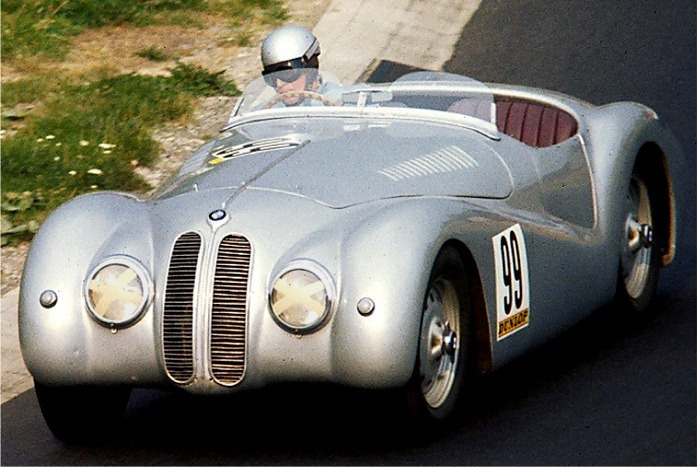

Germany vs Germany — 1936 vs 2020
| 328 | M2 CS F87 | |
|---|---|---|
| Horsepower | 80 hp | 444 hp |
| Torque | 94 lb-ft | 406 lb-ft |
| Engine Size | 1,971 cc | 2,979 cc |
| 0-60 mph | 12.0 sec | 3.8 sec |
| Top Speed | 93 mph | 174 mph |
| ¼ Mile | — | 12.2 sec |
| Weight | 1,830 lbs | 3,417 lbs |
| Wheelbase | 2,400 mm | 2,693 mm |
| Length | 3,900 mm | 4,461 mm |
| Units Produced | 464 | 2,200 |
| Original MSRP | — | $83,600 |
| Value (Excellent) | $1,500,000 | $130,000 |
| Collectibility | 10/10 | 9/10 |
| Rarity | 10/10 | 8/10 |
This matchup is remarkably close. The 1936 BMW 328 offers lighter weight, greater rarity, stronger collectibility, while the 2020 BMW M2 CS F87 counters with more power, quicker acceleration, higher top speed. Neither holds a decisive advantage, making this a true enthusiast's dilemma. Your choice ultimately depends on which driving philosophy resonates more with you.
Within the BMW stable, the 1936 BMW 328 and 2020 BMW M2 CS F87 represent different approaches to performance and purpose. Both carry the BMW badge, yet each carves out its own distinct identity. The 2020 BMW M2 CS F87 holds a clear advantage in raw power with 444 hp compared to 80 hp, a 364-horsepower difference that shapes the driving experience. Under the hood, the contrast is notable: the BMW 328 uses a Inline-6 OHV displacing 1,971 cc, while the BMW M2 CS relies on a Inline-6 Twin-Turbocharged DOHC 24V with 2,979 cc. In the sprint to 60 mph, the 2020 BMW M2 CS F87 edges ahead at 3.8 seconds versus 12.0 seconds. The BMW 328 carries a weight advantage, tipping the scales 1587 lbs lighter. Rarity plays a significant role here — with only 464 units built, the 1936 BMW 328 is considerably scarcer than the BMW M2 CS's 2,200 examples. On the collector market, the 1936 BMW 328 commands a significant premium over the 2020 BMW M2 CS F87, reflecting differences in prestige and rarity.