
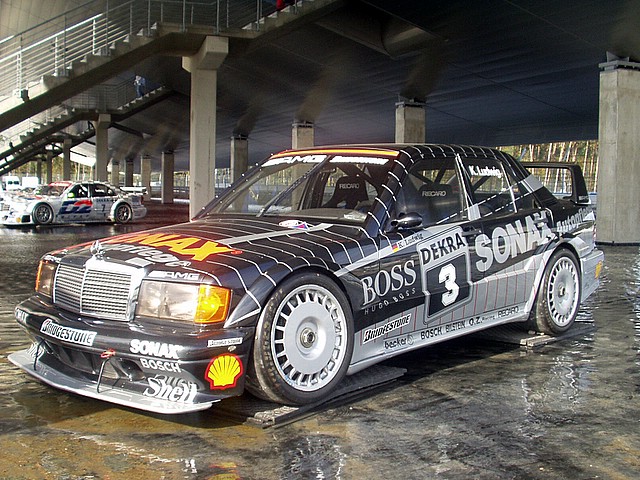
Japan vs Germany — 1998 vs 1992
| Accord Euro R CL1 | 190E 2.5-16 Evolution II | |
|---|---|---|
| Horsepower | 220 hp | 235 hp |
| Torque | 163 lb-ft | 181 lb-ft |
| Engine Size | 2,157 cc | 2,463 cc |
| 0-60 mph | 6.5 sec | 7.1 sec |
| Top Speed | 143 mph | 155 mph |
| ¼ Mile | 14.8 sec | 15.4 sec |
| Weight | 2,888 lbs | 2,998 lbs |
| Wheelbase | 2,670 mm | 2,665 mm |
| Length | 4,590 mm | 4,475 mm |
| Units Produced | — | 502 |
| Original MSRP | — | $75,000 |
| Value (Excellent) | $30,000 | $350,000 |
| Collectibility | 6/10 | 9/10 |
| Rarity | 7/10 | 9/10 |
This matchup is remarkably close. The 1998 Honda Accord Euro R CL1 offers quicker acceleration, better value, while the 1992 Mercedes-Benz 190E 2.5-16 Evolution II counters with higher top speed, stronger collectibility. Neither holds a decisive advantage, making this a true enthusiast's dilemma. Your choice ultimately depends on which driving philosophy resonates more with you.
When Japan engineering meets Germany craftsmanship, the result is one of the most compelling matchups in the classic car world. The 1998 Honda Accord Euro R CL1 and 1992 Mercedes-Benz 190E 2.5-16 Evolution II embody their respective national automotive traditions while competing in the same arena. On paper, the two are remarkably close in power output, with the 1998 Honda Accord Euro R CL1 producing 220 hp and the 1992 Mercedes-Benz 190E 2.5-16 Evolution II delivering 235 hp. Under the hood, the contrast is notable: the Honda Accord uses a Inline-4 DOHC VTEC displacing 2,157 cc, while the Mercedes-Benz 190E relies on a Inline-4 with 2,463 cc. In the sprint to 60 mph, the 1998 Honda Accord Euro R CL1 edges ahead at 6.5 seconds versus 7.1 seconds. On the collector market, the 1992 Mercedes-Benz 190E 2.5-16 Evolution II commands a significant premium over the 1998 Honda Accord Euro R CL1, reflecting differences in prestige and rarity. From a collectibility standpoint, the 1992 Mercedes-Benz 190E 2.5-16 Evolution II rates higher among enthusiasts and auction houses.