
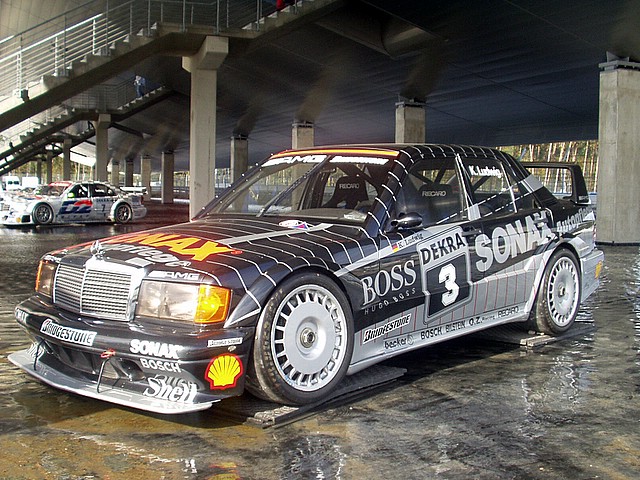
Germany vs Germany — 1986 vs 1992
| Hammer 6.0 Wide Body | 190E 2.5-16 Evolution II | |
|---|---|---|
| Horsepower | 385 hp | 235 hp |
| Torque | — | 181 lb-ft |
| Engine Size | 5,953 cc | 2,463 cc |
| 0-60 mph | — | 7.1 sec |
| Top Speed | — | 155 mph |
| ¼ Mile | — | 15.4 sec |
| Weight | — | 2,998 lbs |
| Wheelbase | 2,800 mm | 2,665 mm |
| Length | 4,740 mm | 4,475 mm |
| Units Produced | 30 | 502 |
| Original MSRP | — | $75,000 |
| Value (Excellent) | $500,000 | $350,000 |
| Collectibility | 5/10 | 9/10 |
| Rarity | 10/10 | 9/10 |
This matchup is remarkably close. The 1986 Mercedes-AMG Hammer 6.0 Wide Body offers more power, greater rarity, while the 1992 Mercedes-Benz 190E 2.5-16 Evolution II counters with stronger collectibility. Neither holds a decisive advantage, making this a true enthusiast's dilemma. Your choice ultimately depends on which driving philosophy resonates more with you.
The 1986 Mercedes-AMG Hammer 6.0 Wide Body and 1992 Mercedes-Benz 190E 2.5-16 Evolution II stand as two of the most notable Sports Sedan cars from Modern classic. Both emerged during a period of intense competition, and choosing between them remains a passionate debate among collectors. The 1986 Mercedes-AMG Hammer 6.0 Wide Body holds a clear advantage in raw power with 385 hp compared to 235 hp, a 150-horsepower difference that shapes the driving experience. Under the hood, the contrast is notable: the Mercedes-AMG Hammer uses a V8 displacing 5,953 cc, while the Mercedes-Benz 190E relies on a Inline-4 with 2,463 cc. Rarity plays a significant role here — with only 30 units built, the 1986 Mercedes-AMG Hammer 6.0 Wide Body is considerably scarcer than the Mercedes-Benz 190E's 502 examples. Both trade at comparable values on the collector market, making the choice between them largely one of personal preference. From a collectibility standpoint, the 1992 Mercedes-Benz 190E 2.5-16 Evolution II rates higher among enthusiasts and auction houses.