
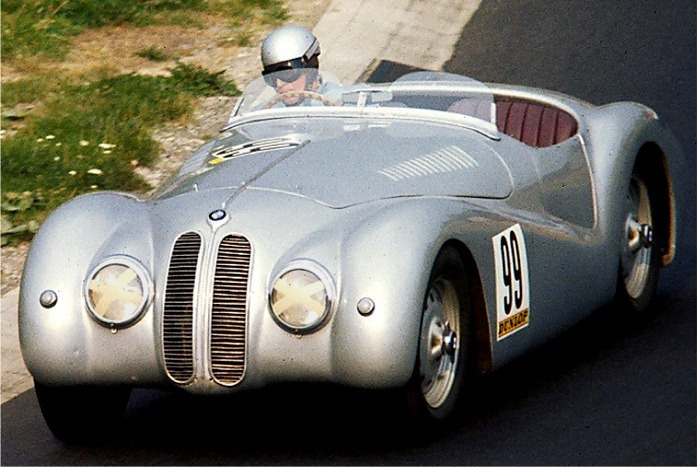
Germany vs Germany — 1937 vs 1936
| 328 Roadster | 328 Roadster Mille Miglia | |
|---|---|---|
| Horsepower | 80 hp | 80 hp |
| Torque | 101 lb-ft | 101 lb-ft |
| Engine Size | 1,971 cc | 1,971 cc |
| 0-60 mph | 12.0 sec | 10.0 sec |
| Top Speed | 96 mph | 96 mph |
| ¼ Mile | — | 17.5 sec |
| Weight | 1,830 lbs | 1,830 lbs |
| Wheelbase | 2,400 mm | 2,400 mm |
| Length | 3,900 mm | 3,900 mm |
| Units Produced | 464 | 464 |
| Value (Excellent) | $1,500,000 | $2,500,000 |
| Collectibility | 10/10 | 10/10 |
| Rarity | 10/10 | 10/10 |
This matchup is remarkably close. The 1937 BMW 328 Roadster offers its unique character, while the 1936 BMW 328 Roadster Mille Miglia counters with quicker acceleration. Neither holds a decisive advantage, making this a true enthusiast's dilemma. Your choice ultimately depends on which driving philosophy resonates more with you.
The BMW 328 lineage tells a fascinating story of automotive evolution. Comparing the 1937 BMW 328 Roadster with the 1936 BMW 328 Roadster Mille Miglia reveals how BMW refined and reimagined one of its most important nameplates over the years. On paper, the two are remarkably close in power output, with the 1937 BMW 328 Roadster producing 80 hp and the 1936 BMW 328 Roadster Mille Miglia delivering 80 hp. Under the hood, the contrast is notable: the BMW 328 uses a Inline-6 OHV Cross-pushrod hemispherical 12V displacing 1,971 cc, while the BMW 328 relies on a Inline-6 OHV with 1,971 cc. In the sprint to 60 mph, the 1936 BMW 328 Roadster Mille Miglia edges ahead at 10.0 seconds versus 12.0 seconds. Both trade at comparable values on the collector market, making the choice between them largely one of personal preference.