
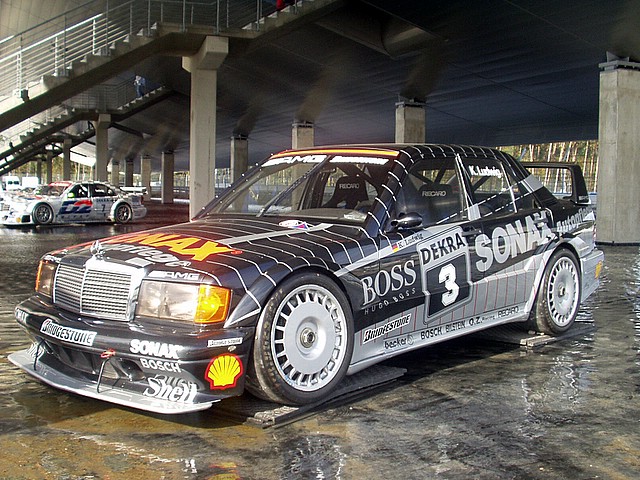
Japan vs Germany — 2014 vs 1992
| WRX STI S208 | 190E 2.5-16 Evolution II | |
|---|---|---|
| Horsepower | 329 hp | 235 hp |
| Torque | 319 lb-ft | 181 lb-ft |
| Engine Size | 1,994 cc | 2,463 cc |
| 0-60 mph | 4.2 sec | 7.1 sec |
| Top Speed | 162 mph | 155 mph |
| ¼ Mile | 12.7 sec | 15.4 sec |
| Weight | 3,175 lbs | 2,998 lbs |
| Wheelbase | 2,650 mm | 2,665 mm |
| Length | 4,595 mm | 4,475 mm |
| Units Produced | 450 | 502 |
| Original MSRP | — | $75,000 |
| Value (Excellent) | $100,000 | $350,000 |
| Collectibility | 8/10 | 9/10 |
| Rarity | 9/10 | 9/10 |
On balance, the 2014 Subaru WRX STI S208 makes a stronger case on paper with more power, quicker acceleration, higher top speed. However, the 1992 Mercedes-Benz 190E 2.5-16 Evolution II counters with lighter weight, stronger collectibility, and its appeal extends beyond mere numbers. Choose the 2014 Subaru WRX STI S208 for outright capability, or the 1992 Mercedes-Benz 190E 2.5-16 Evolution II for a more distinctive ownership experience.
The rivalry between Japan and Germany automotive industries has produced legendary matchups, and the 2014 Subaru WRX STI S208 versus 1992 Mercedes-Benz 190E 2.5-16 Evolution II is among the most fascinating. These two cars represent the best of their national engineering schools. The 2014 Subaru WRX STI S208 holds a clear advantage in raw power with 329 hp compared to 235 hp, a 94-horsepower difference that shapes the driving experience. Under the hood, the contrast is notable: the Subaru WRX STI uses a Flat-4 DOHC 16-valve turbo (EJ207) displacing 1,994 cc, while the Mercedes-Benz 190E relies on a Inline-4 with 2,463 cc. In the sprint to 60 mph, the 2014 Subaru WRX STI S208 edges ahead at 4.2 seconds versus 7.1 seconds. On the collector market, the 1992 Mercedes-Benz 190E 2.5-16 Evolution II commands a significant premium over the 2014 Subaru WRX STI S208, reflecting differences in prestige and rarity.