
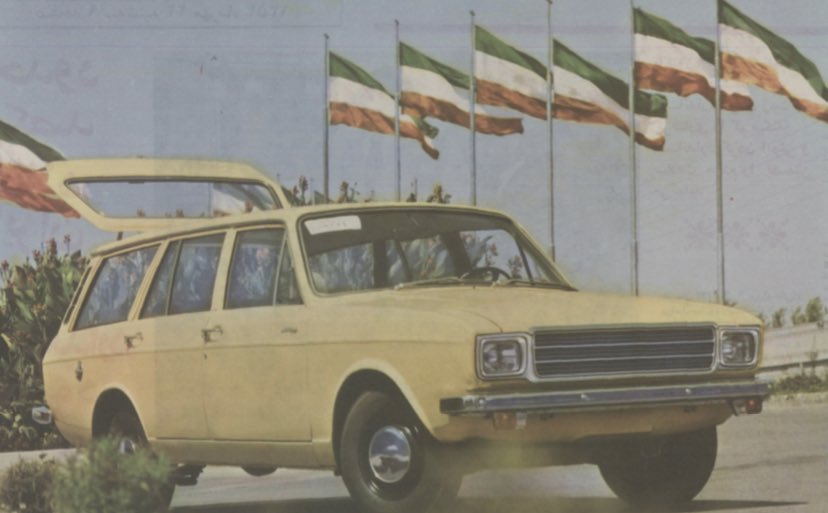
USA vs Iran — 1962 vs 1967
| Lark Daytona Convertible | Paykan Deluxe | |
|---|---|---|
| Horsepower | 225 hp | 68 hp |
| Torque | 280 lb-ft | 92 lb-ft |
| Engine Size | 4,736 cc | 1,725 cc |
| 0-60 mph | 9.5 sec | — |
| Top Speed | 115 mph | 87 mph |
| ¼ Mile | 17.0 sec | — |
| Weight | 3,049 lbs | 2,205 lbs |
| Wheelbase | 2,794 mm | 2,489 mm |
| Length | 4,775 mm | 4,267 mm |
| Units Produced | 3,602 | — |
| Original MSRP | $2,814 | — |
| Value (Excellent) | $45,000 | $10,000 |
| Collectibility | 6/10 | 5/10 |
| Rarity | 7/10 | 3/10 |
It's a closely fought contest. The 1962 Studebaker Lark Daytona Convertible brings more power, higher top speed, stronger collectibility to the table, and the 1967 Iran Khodro Paykan Deluxe answers with lighter weight, better value. Both are excellent machines that reward their owners in different ways — there's no wrong answer here.
The rivalry between USA and Iran automotive industries has produced legendary matchups, and the 1962 Studebaker Lark Daytona Convertible versus 1967 Iran Khodro Paykan Deluxe is among the most fascinating. These two cars represent the best of their national engineering schools. The 1962 Studebaker Lark Daytona Convertible holds a clear advantage in raw power with 225 hp compared to 68 hp, a 157-horsepower difference that shapes the driving experience. Under the hood, the contrast is notable: the Studebaker Lark uses a V8 OHV displacing 4,736 cc, while the Iran Khodro Paykan relies on a Inline-4 OHV with 1,725 cc. The 1962 Studebaker Lark Daytona Convertible claims a higher top speed at 115 mph compared to 87 mph. The Iran Khodro Paykan carries a weight advantage, tipping the scales 844 lbs lighter. On the collector market, the 1962 Studebaker Lark Daytona Convertible commands a significant premium over the 1967 Iran Khodro Paykan Deluxe, reflecting differences in prestige and rarity.