
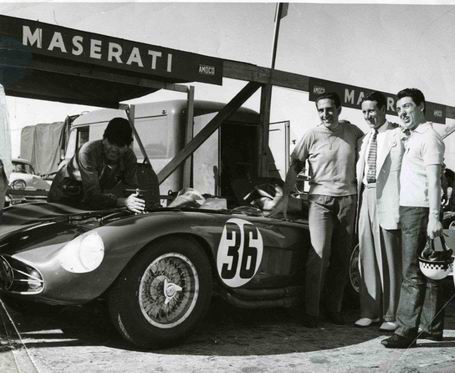
Italy vs Italy — 1962 vs 1963
| Sebring Series II | Sebring | |
|---|---|---|
| Horsepower | 245 hp | 235 hp |
| Torque | 246 lb-ft | 224 lb-ft |
| Engine Size | 3,694 cc | 3,485 cc |
| 0-60 mph | 7.5 sec | 8.2 sec |
| Top Speed | 143 mph | 140 mph |
| ¼ Mile | 15.3 sec | 16.0 sec |
| Weight | 3,021 lbs | 3,197 lbs |
| Wheelbase | 2,500 mm | 2,620 mm |
| Length | 4,580 mm | 4,570 mm |
| Units Produced | 591 | 591 |
| Original MSRP | $11,800 | $11,600 |
| Value (Excellent) | $350,000 | $180,000 |
| Collectibility | 7/10 | 7/10 |
| Rarity | 7/10 | 7/10 |
The 1962 Maserati Sebring Series II holds an edge across most measurable criteria, offering quicker acceleration, higher top speed, lighter weight. That said, the 1963 Maserati Sebring brings better value and remains a compelling choice for enthusiasts who value Maserati heritage. The right pick depends on whether you prioritize specifications or the intangible qualities that make a car truly special.
Tracing the evolution of the Maserati Sebring from 1962 to 1963 offers a compelling look at how automotive design and engineering progressed. These two variants showcase the changing face of Maserati. On paper, the two are remarkably close in power output, with the 1962 Maserati Sebring Series II producing 245 hp and the 1963 Maserati Sebring delivering 235 hp. Under the hood, the contrast is notable: the Maserati Sebring uses a Straight-6 DOHC displacing 3,694 cc, while the Maserati Sebring relies on a Inline-6 DOHC with 3,485 cc. In the sprint to 60 mph, the 1962 Maserati Sebring Series II edges ahead at 7.5 seconds versus 8.2 seconds. Whether you prioritize driving dynamics, heritage, or aesthetic appeal, both contenders make a strong case for themselves.