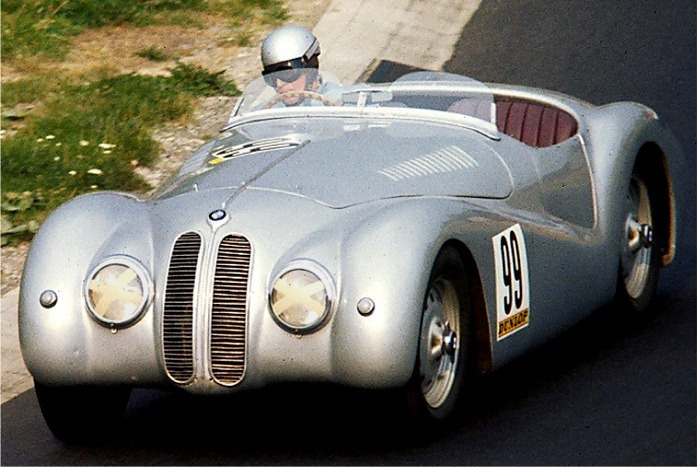

Germany vs Germany — 1936 vs 1968
| 328 | 2002tii Touring | |
|---|---|---|
| Horsepower | 80 hp | 130 hp |
| Torque | 94 lb-ft | 131 lb-ft |
| Engine Size | 1,971 cc | 1,990 cc |
| 0-60 mph | 12.0 sec | 8.5 sec |
| Top Speed | 93 mph | 115 mph |
| ¼ Mile | — | 16.4 sec |
| Weight | 1,830 lbs | 2,315 lbs |
| Wheelbase | 2,400 mm | 2,500 mm |
| Length | 3,900 mm | 4,220 mm |
| Units Produced | 464 | 38,703 |
| Original MSRP | — | $3,895 |
| Value (Excellent) | $1,500,000 | $85,000 |
| Collectibility | 10/10 | 9/10 |
| Rarity | 10/10 | 7/10 |
It's a closely fought contest. The 1936 BMW 328 brings lighter weight, greater rarity, stronger collectibility to the table, and the 1968 BMW 2002tii Touring answers with more power, quicker acceleration, higher top speed. Both are excellent machines that reward their owners in different ways — there's no wrong answer here.
BMW has long offered a diverse lineup, and comparing the 1936 BMW 328 with the 1968 BMW 2002tii Touring highlights the breadth of the marque's engineering philosophy. The 1968 BMW 2002tii Touring holds a clear advantage in raw power with 130 hp compared to 80 hp, a 50-horsepower difference that shapes the driving experience. Under the hood, the contrast is notable: the BMW 328 uses a Inline-6 OHV displacing 1,971 cc, while the BMW 2002tii relies on a Inline-4 SOHC with 1,990 cc. In the sprint to 60 mph, the 1968 BMW 2002tii Touring edges ahead at 8.5 seconds versus 12.0 seconds. The BMW 328 carries a weight advantage, tipping the scales 485 lbs lighter. Rarity plays a significant role here — with only 464 units built, the 1936 BMW 328 is considerably scarcer than the BMW 2002tii's 38,703 examples. On the collector market, the 1936 BMW 328 commands a significant premium over the 1968 BMW 2002tii Touring, reflecting differences in prestige and rarity.