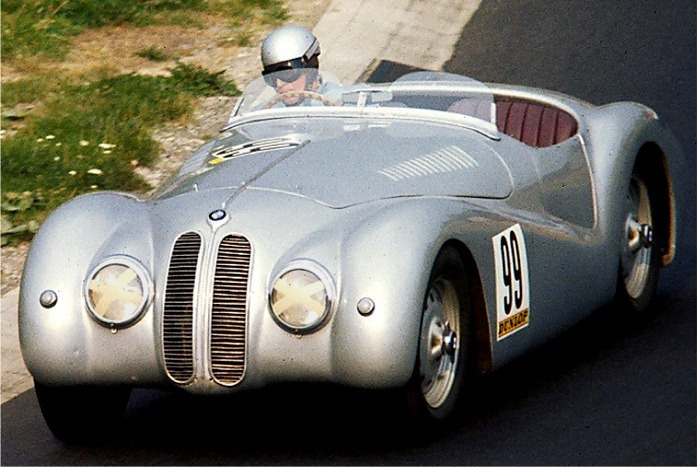

Germany vs UK — 1936 vs 1921
| 328 | 3 Litre | |
|---|---|---|
| Horsepower | 80 hp | 80 hp |
| Torque | 94 lb-ft | — |
| Engine Size | 1,971 cc | 2,996 cc |
| 0-60 mph | 12.0 sec | — |
| Top Speed | 93 mph | 80 mph |
| Weight | 1,830 lbs | 3,024 lbs |
| Wheelbase | 2,400 mm | 2,985 mm |
| Length | 3,900 mm | 4,267 mm |
| Units Produced | 464 | 1,622 |
| Value (Excellent) | $1,500,000 | $1,500,000 |
| Collectibility | 10/10 | 10/10 |
| Rarity | 10/10 | 8/10 |
The 1936 BMW 328 holds an edge across most measurable criteria, offering higher top speed, lighter weight, greater rarity. That said, the 1921 Bentley 3 Litre brings better value and remains a compelling choice for enthusiasts who value Bentley heritage. The right pick depends on whether you prioritize specifications or the intangible qualities that make a car truly special.
Putting the 1936 BMW 328 against the 1921 Bentley 3 Litre is a comparison that enthusiasts have debated for decades. Each car reflects distinct design philosophies shaped by different automotive cultures — Germany versus UK. On paper, the two are remarkably close in power output, with the 1936 BMW 328 producing 80 hp and the 1921 Bentley 3 Litre delivering 80 hp. Under the hood, the contrast is notable: the BMW 328 uses a Inline-6 OHV displacing 1,971 cc, while the Bentley 3 Litre relies on a Inline-4 SOHC with 2,996 cc. The 1936 BMW 328 claims a higher top speed at 93 mph compared to 80 mph. The BMW 328 carries a weight advantage, tipping the scales 1194 lbs lighter. Rarity plays a significant role here — with only 464 units built, the 1936 BMW 328 is considerably scarcer than the Bentley 3 Litre's 1,622 examples. On the collector market, the 1936 BMW 328 commands a significant premium over the 1921 Bentley 3 Litre, reflecting differences in prestige and rarity.