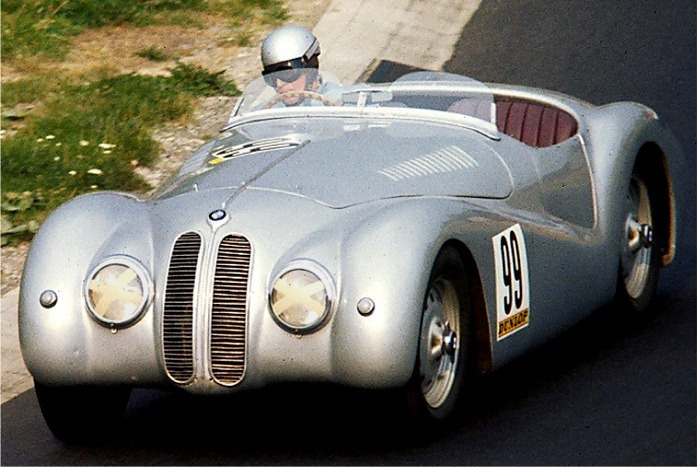

Germany vs UK — 1936 vs 1945
| 328 | TC Midget | |
|---|---|---|
| Horsepower | 80 hp | 54 hp |
| Torque | 94 lb-ft | 64 lb-ft |
| Engine Size | 1,971 cc | 1,250 cc |
| 0-60 mph | 12.0 sec | 22.7 sec |
| Top Speed | 93 mph | 75 mph |
| ¼ Mile | — | 23.0 sec |
| Weight | 1,830 lbs | 1,731 lbs |
| Wheelbase | 2,400 mm | 2,388 mm |
| Length | 3,900 mm | 3,556 mm |
| Units Produced | 464 | 10,000 |
| Original MSRP | — | $2,400 |
| Value (Excellent) | $1,500,000 | $75,000 |
| Collectibility | 10/10 | 9/10 |
| Rarity | 10/10 | 6/10 |
The 1936 BMW 328 holds an edge across most measurable criteria, offering more power, quicker acceleration, higher top speed. That said, the 1945 MG TC Midget brings lighter weight, better value and remains a compelling choice for enthusiasts who value MG heritage. The right pick depends on whether you prioritize specifications or the intangible qualities that make a car truly special.
When Germany engineering meets UK craftsmanship, the result is one of the most compelling matchups in the classic car world. The 1936 BMW 328 and 1945 MG TC Midget embody their respective national automotive traditions while competing in the same arena. The 1936 BMW 328 holds a clear advantage in raw power with 80 hp compared to 54 hp, a 26-horsepower difference that shapes the driving experience. Under the hood, the contrast is notable: the BMW 328 uses a Inline-6 OHV displacing 1,971 cc, while the MG TC relies on a Inline-4 OHV with 1,250 cc. In the sprint to 60 mph, the 1936 BMW 328 edges ahead at 12.0 seconds versus 22.7 seconds. Rarity plays a significant role here — with only 464 units built, the 1936 BMW 328 is considerably scarcer than the MG TC's 10,000 examples. On the collector market, the 1936 BMW 328 commands a significant premium over the 1945 MG TC Midget, reflecting differences in prestige and rarity.