
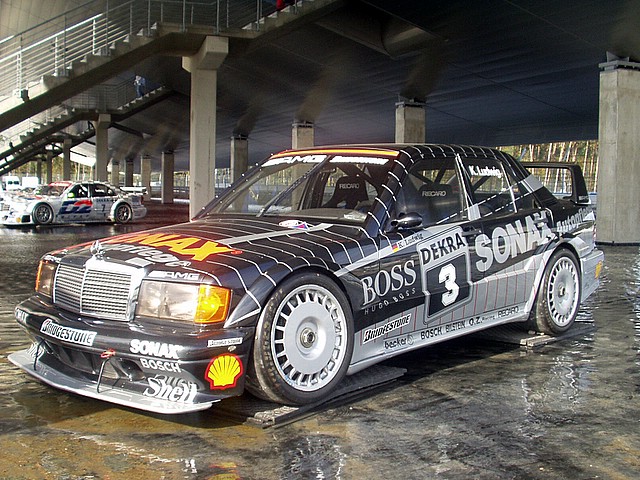
Japan vs Germany — 2002 vs 1992
| Accord Euro R CL7 | 190E 2.5-16 Evolution II | |
|---|---|---|
| Horsepower | 220 hp | 235 hp |
| Torque | 152 lb-ft | 181 lb-ft |
| Engine Size | 1,998 cc | 2,463 cc |
| 0-60 mph | 6.3 sec | 7.1 sec |
| Top Speed | 146 mph | 155 mph |
| ¼ Mile | 14.5 sec | 15.4 sec |
| Weight | 2,932 lbs | 2,998 lbs |
| Wheelbase | 2,670 mm | 2,665 mm |
| Length | 4,665 mm | 4,475 mm |
| Units Produced | — | 502 |
| Original MSRP | — | $75,000 |
| Value (Excellent) | $35,000 | $350,000 |
| Collectibility | 7/10 | 9/10 |
| Rarity | 7/10 | 9/10 |
Two outstanding machines, each with compelling strengths. The 2002 Honda Accord Euro R CL7 excels in quicker acceleration, better value, while the 1992 Mercedes-Benz 190E 2.5-16 Evolution II stands out for higher top speed, stronger collectibility. The best advice? Drive both if you can, then follow your instincts.
Putting the 2002 Honda Accord Euro R CL7 against the 1992 Mercedes-Benz 190E 2.5-16 Evolution II is a comparison that enthusiasts have debated for decades. Each car reflects distinct design philosophies shaped by different automotive cultures — Japan versus Germany. On paper, the two are remarkably close in power output, with the 2002 Honda Accord Euro R CL7 producing 220 hp and the 1992 Mercedes-Benz 190E 2.5-16 Evolution II delivering 235 hp. Under the hood, the contrast is notable: the Honda Accord Euro R uses a Inline-4 DOHC i-VTEC displacing 1,998 cc, while the Mercedes-Benz 190E relies on a Inline-4 with 2,463 cc. In the sprint to 60 mph, the 2002 Honda Accord Euro R CL7 edges ahead at 6.3 seconds versus 7.1 seconds. On the collector market, the 1992 Mercedes-Benz 190E 2.5-16 Evolution II commands a significant premium over the 2002 Honda Accord Euro R CL7, reflecting differences in prestige and rarity. From a collectibility standpoint, the 1992 Mercedes-Benz 190E 2.5-16 Evolution II rates higher among enthusiasts and auction houses.