
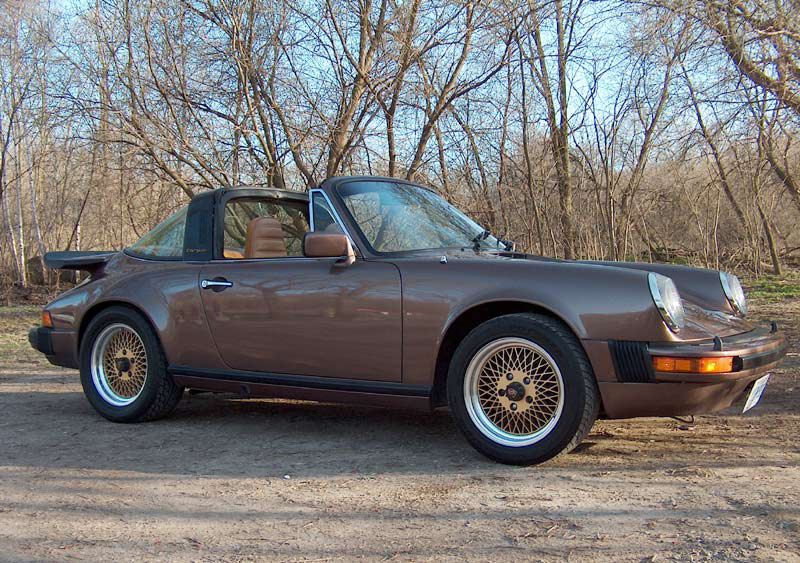
Japan vs West Germany — 1982 vs 1978
| Starion ESI-R Wide Body | 911 SC Targa | |
|---|---|---|
| Horsepower | 188 hp | 180 hp |
| Torque | 228 lb-ft | 196 lb-ft |
| Engine Size | 2,555 cc | 2,994 cc |
| 0-60 mph | 7.2 sec | 6.3 sec |
| Top Speed | 137 mph | 146 mph |
| ¼ Mile | 15.4 sec | 14.8 sec |
| Weight | 2,932 lbs | 2,557 lbs |
| Wheelbase | 2,435 mm | 2,272 mm |
| Length | 4,430 mm | 4,291 mm |
| Units Produced | — | 58,914 |
| Original MSRP | $18,799 | $27,450 |
| Value (Excellent) | $35,000 | $150,000 |
| Collectibility | 6/10 | 7/10 |
| Rarity | 7/10 | 4/10 |
Numbers favor the 1978 Porsche 911 SC Targa with quicker acceleration, higher top speed, lighter weight. The 1982 Mitsubishi Starion ESI-R Wide Body offers better value, and has its own devoted following. For those who let their heart decide, either car delivers a rewarding ownership experience.
The rivalry between Japan and West Germany automotive industries has produced legendary matchups, and the 1982 Mitsubishi Starion ESI-R Wide Body versus 1978 Porsche 911 SC Targa is among the most fascinating. These two cars represent the best of their national engineering schools. On paper, the two are remarkably close in power output, with the 1982 Mitsubishi Starion ESI-R Wide Body producing 188 hp and the 1978 Porsche 911 SC Targa delivering 180 hp. Under the hood, the contrast is notable: the Mitsubishi Starion uses a Inline-4 SOHC Turbo displacing 2,555 cc, while the Porsche 911 SC relies on a Flat-6 SOHC with 2,994 cc. In the sprint to 60 mph, the 1978 Porsche 911 SC Targa edges ahead at 6.3 seconds versus 7.2 seconds. The Porsche 911 SC carries a weight advantage, tipping the scales 375 lbs lighter. On the collector market, the 1978 Porsche 911 SC Targa commands a significant premium over the 1982 Mitsubishi Starion ESI-R Wide Body, reflecting differences in prestige and rarity.