
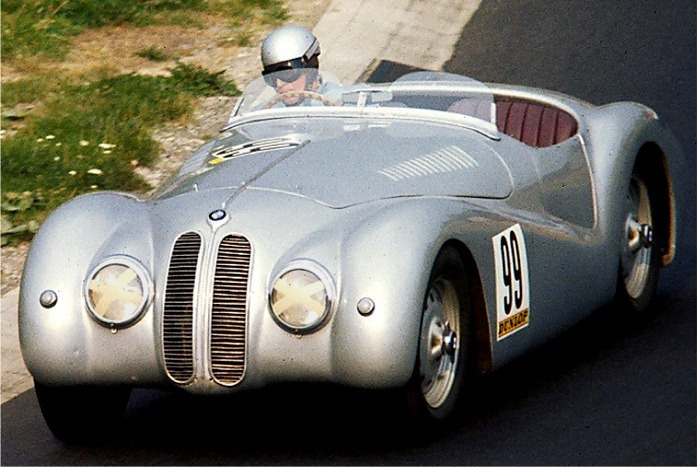
USA vs Germany — 1912 vs 1936
| Bearcat Series H | 328 Roadster Mille Miglia | |
|---|---|---|
| Horsepower | 60 hp | 80 hp |
| Torque | — | 101 lb-ft |
| Engine Size | 6,388 cc | 1,971 cc |
| 0-60 mph | — | 10.0 sec |
| Top Speed | 80 mph | 96 mph |
| ¼ Mile | — | 17.5 sec |
| Weight | 2,400 lbs | 1,830 lbs |
| Wheelbase | 3,048 mm | 2,400 mm |
| Length | 3,810 mm | 3,900 mm |
| Units Produced | — | 464 |
| Original MSRP | $2,000 | — |
| Value (Excellent) | $2,000,000 | $2,500,000 |
| Collectibility | 10/10 | 10/10 |
| Rarity | 10/10 | 10/10 |
Numbers favor the 1936 BMW 328 Roadster Mille Miglia with more power, higher top speed, lighter weight. The 1912 Stutz Bearcat Series H offers better value, and has its own devoted following. For those who let their heart decide, either car delivers a rewarding ownership experience.
The rivalry between USA and Germany automotive industries has produced legendary matchups, and the 1912 Stutz Bearcat Series H versus 1936 BMW 328 Roadster Mille Miglia is among the most fascinating. These two cars represent the best of their national engineering schools. The 1936 BMW 328 Roadster Mille Miglia holds a clear advantage in raw power with 80 hp compared to 60 hp, a 20-horsepower difference that shapes the driving experience. Under the hood, the contrast is notable: the Stutz Bearcat uses a Inline-4 T-head displacing 6,388 cc, while the BMW 328 relies on a Inline-6 OHV with 1,971 cc. The 1936 BMW 328 Roadster Mille Miglia claims a higher top speed at 96 mph compared to 80 mph. The BMW 328 carries a weight advantage, tipping the scales 570 lbs lighter. Each of these machines offers a unique window into the era that produced it, making both worthy of consideration by collectors and drivers alike.