
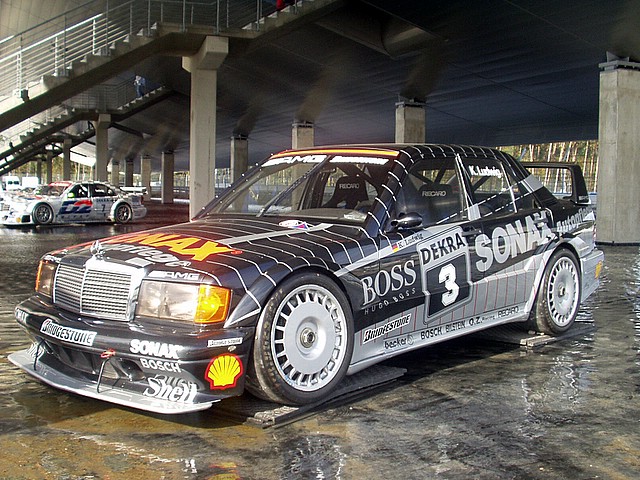
Germany vs Germany — 1990 vs 1992
| 190E 2.5-16 Evolution II | 190E 2.5-16 Evolution II | |
|---|---|---|
| Horsepower | 235 hp | 235 hp |
| Torque | 181 lb-ft | 181 lb-ft |
| Engine Size | 2,463 cc | 2,463 cc |
| 0-60 mph | 7.1 sec | 7.1 sec |
| Top Speed | 155 mph | 155 mph |
| ¼ Mile | 15.2 sec | 15.4 sec |
| Weight | — | 2,998 lbs |
| Wheelbase | 2,665 mm | 2,665 mm |
| Length | 4,487 mm | 4,475 mm |
| Units Produced | 502 | 502 |
| Original MSRP | — | $75,000 |
| Value (Excellent) | $500,000 | $350,000 |
| Collectibility | 5/10 | 9/10 |
| Rarity | 9/10 | 9/10 |
The 1992 Mercedes-Benz 190E 2.5-16 Evolution II emerges ahead in most objective measures, offering quicker acceleration, stronger collectibility, better value. The 1990 Mercedes-Benz 190E 2.5-16 Evolution II counters with its unique character, but the numbers favor its rival. Still, both are remarkable machines, and the final choice often comes down to which driving experience speaks to you.
The Mercedes-Benz 190E lineage tells a fascinating story of automotive evolution. Comparing the 1990 Mercedes-Benz 190E 2.5-16 Evolution II with the 1992 Mercedes-Benz 190E 2.5-16 Evolution II reveals how Mercedes-Benz refined and reimagined one of its most important nameplates over the years. On paper, the two are remarkably close in power output, with the 1990 Mercedes-Benz 190E 2.5-16 Evolution II producing 235 hp and the 1992 Mercedes-Benz 190E 2.5-16 Evolution II delivering 235 hp. Under the hood, the contrast is notable: the Mercedes-Benz 190E uses a Inline-4 DOHC 16V displacing 2,463 cc, while the Mercedes-Benz 190E relies on a Inline-4 with 2,463 cc. In the sprint to 60 mph, the 1992 Mercedes-Benz 190E 2.5-16 Evolution II edges ahead at 7.1 seconds versus 7.1 seconds. From a collectibility standpoint, the 1992 Mercedes-Benz 190E 2.5-16 Evolution II rates higher among enthusiasts and auction houses.