
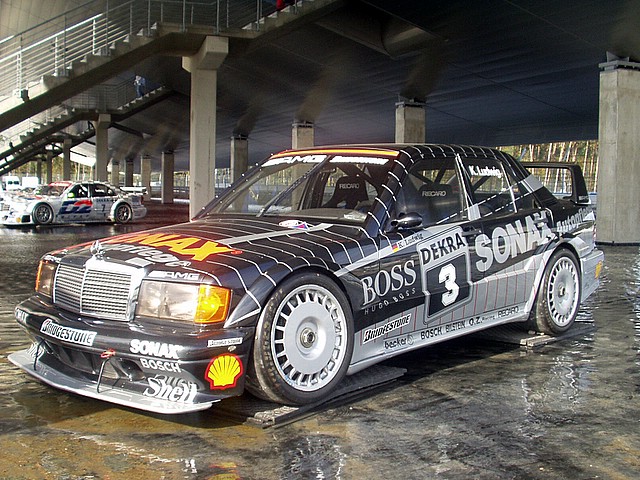
Japan vs Germany — 1996 vs 1992
| Lancer Evolution Evo VI TME | 190E 2.5-16 Evolution II | |
|---|---|---|
| Horsepower | 280 hp | 235 hp |
| Torque | 275 lb-ft | 181 lb-ft |
| Engine Size | 1,997 cc | 2,463 cc |
| 0-60 mph | 4.4 sec | 7.1 sec |
| Top Speed | 155 mph | 155 mph |
| ¼ Mile | 13.1 sec | 15.4 sec |
| Weight | 2,998 lbs | 2,998 lbs |
| Wheelbase | 2,510 mm | 2,665 mm |
| Length | 4,350 mm | 4,475 mm |
| Units Produced | — | 502 |
| Original MSRP | — | $75,000 |
| Value (Excellent) | $100,000 | $350,000 |
| Collectibility | 8/10 | 9/10 |
| Rarity | 7/10 | 9/10 |
The 1996 Mitsubishi Lancer Evolution Evo VI TME holds an edge across most measurable criteria, offering more power, quicker acceleration, better value. That said, the 1992 Mercedes-Benz 190E 2.5-16 Evolution II brings stronger collectibility and remains a compelling choice for enthusiasts who value Mercedes-Benz heritage. The right pick depends on whether you prioritize specifications or the intangible qualities that make a car truly special.
Putting the 1996 Mitsubishi Lancer Evolution Evo VI TME against the 1992 Mercedes-Benz 190E 2.5-16 Evolution II is a comparison that enthusiasts have debated for decades. Each car reflects distinct design philosophies shaped by different automotive cultures — Japan versus Germany. The 1996 Mitsubishi Lancer Evolution Evo VI TME holds a clear advantage in raw power with 280 hp compared to 235 hp, a 45-horsepower difference that shapes the driving experience. Under the hood, the contrast is notable: the Mitsubishi Lancer Evolution uses a Inline-4 Turbo 4G63T displacing 1,997 cc, while the Mercedes-Benz 190E relies on a Inline-4 with 2,463 cc. In the sprint to 60 mph, the 1996 Mitsubishi Lancer Evolution Evo VI TME edges ahead at 4.4 seconds versus 7.1 seconds. On the collector market, the 1992 Mercedes-Benz 190E 2.5-16 Evolution II commands a significant premium over the 1996 Mitsubishi Lancer Evolution Evo VI TME, reflecting differences in prestige and rarity.